OFFICE NO 5 & 6, 3RD FLOOR,
EARTH ALPHA COMPLEX
VASNA BHAYLI RD, VADODARA
GUJARAT, INDIA

Understand What “Ready Brand” Means
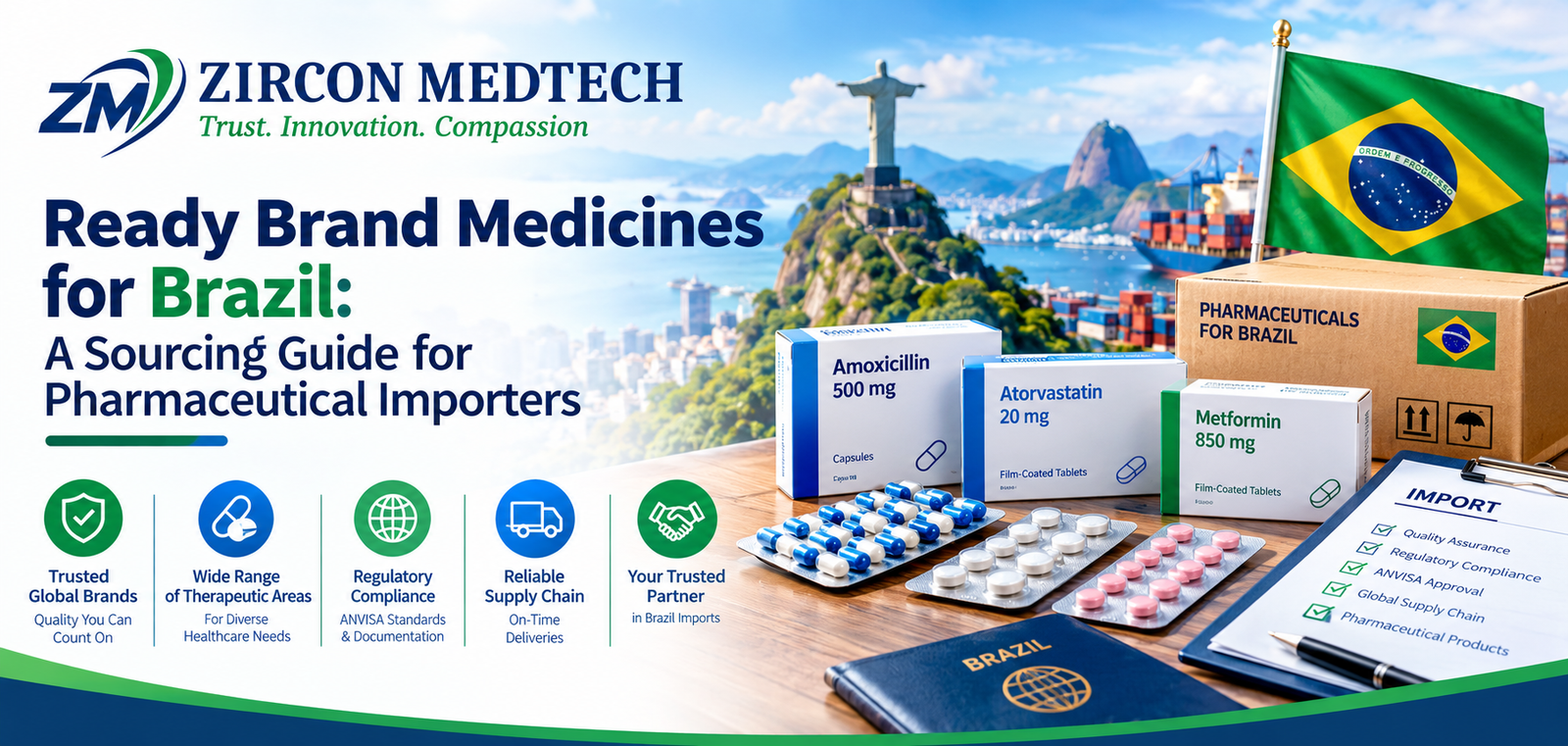
A ready brand medicine is generally a product offered under an existing brand name rather than a new brand developed specifically for the importer. The supplier may already have a formulation, packaging design and product information available.
Importers should still confirm exactly what is being offered. A familiar brand name does not establish whether the proposed strength, dosage form, manufacturing site and packaging are suitable for Brazil.
Check the Product’s Status in Brazil
Before discussing order volumes or launch dates, importers should check whether the specific medicine is registered with Anvisa and identify the company responsible for its Brazilian registration.
If it is not registered, the importer should establish the applicable regulatory route before assuming that commercial supply is possible. Anvisa states that companies seeking to commercialise medicines in Brazil need the relevant product registration and company authorisation, among other requirements.
Evaluate the Manufacturer and Product Quality
Importers should verify the manufacturer’s identity, facility location and authorisation to produce the relevant dosage form. They should also review the supplier’s quality systems and the documents available for the proposed product.
Product evaluation should cover the active ingredient, strength, specifications, shelf life, storage conditions and packaging. For each proposed medicine, buyers should request appropriate quality documentation and confirm that the supplied product will match the product assessed for Brazil.
Review Packaging and Labelling
Packaging prepared for another country may need changes before a medicine can be supplied in Brazil. Importers should review the proposed label, product information and pack configuration against the version approved for the Brazilian market.
Anvisa states that imported products presented for consumption must carry the information approved during their regularisation, subject to the applicable sanitary rules. Labelling should therefore be addressed early in supplier discussions, before packaging is printed or stock is shipped.
Confirm Importer Responsibilities
The Brazilian importer should confirm that it has the authorisations needed for its activities and understand who holds the product registration. These roles affect the documents, permissions and processes needed for importation.
Import requirements can also differ by product. For example, controlled medicines may involve additional procedures. Importers should review the requirements for each medicine rather than applying one process to an entire product portfolio.
Check Documentation Before Placing an Order
A supplier should be able to explain which product and shipment documents it can provide. Depending on the medicine and transaction, importers may need to review manufacturing and quality documents, product specifications, batch documentation, invoices, packing lists and shipping records.
Document availability should be confirmed before an order is finalised. Missing or inconsistent information can delay regulatory review, shipment planning or import processing.
Assess Supply Reliability
A competitive price has limited value if the supplier cannot deliver the agreed product consistently. Importers should discuss production capacity, minimum order quantities, lead times, remaining shelf life at dispatch and how changes to the product or manufacturing process will be communicated.
Clear agreements on these points help buyers plan inventory and maintain continuity of supply.
Build a Suitable Sourcing Partnership
Sourcing ready brand medicines for Brazil requires coordinated work between the supplier, manufacturer, registration holder and importer. Each party should understand its responsibilities for product information, quality, packaging, documentation and shipment.
By checking the product’s Brazilian status first, then reviewing its manufacturer, documentation and supply arrangements, pharmaceutical importers can make a more informed sourcing decision and avoid committing to stock before the route to market is clear.









Share This News