OFFICE NO 5 & 6, 3RD FLOOR,
EARTH ALPHA COMPLEX
VASNA BHAYLI RD, VADODARA
GUJARAT, INDIA

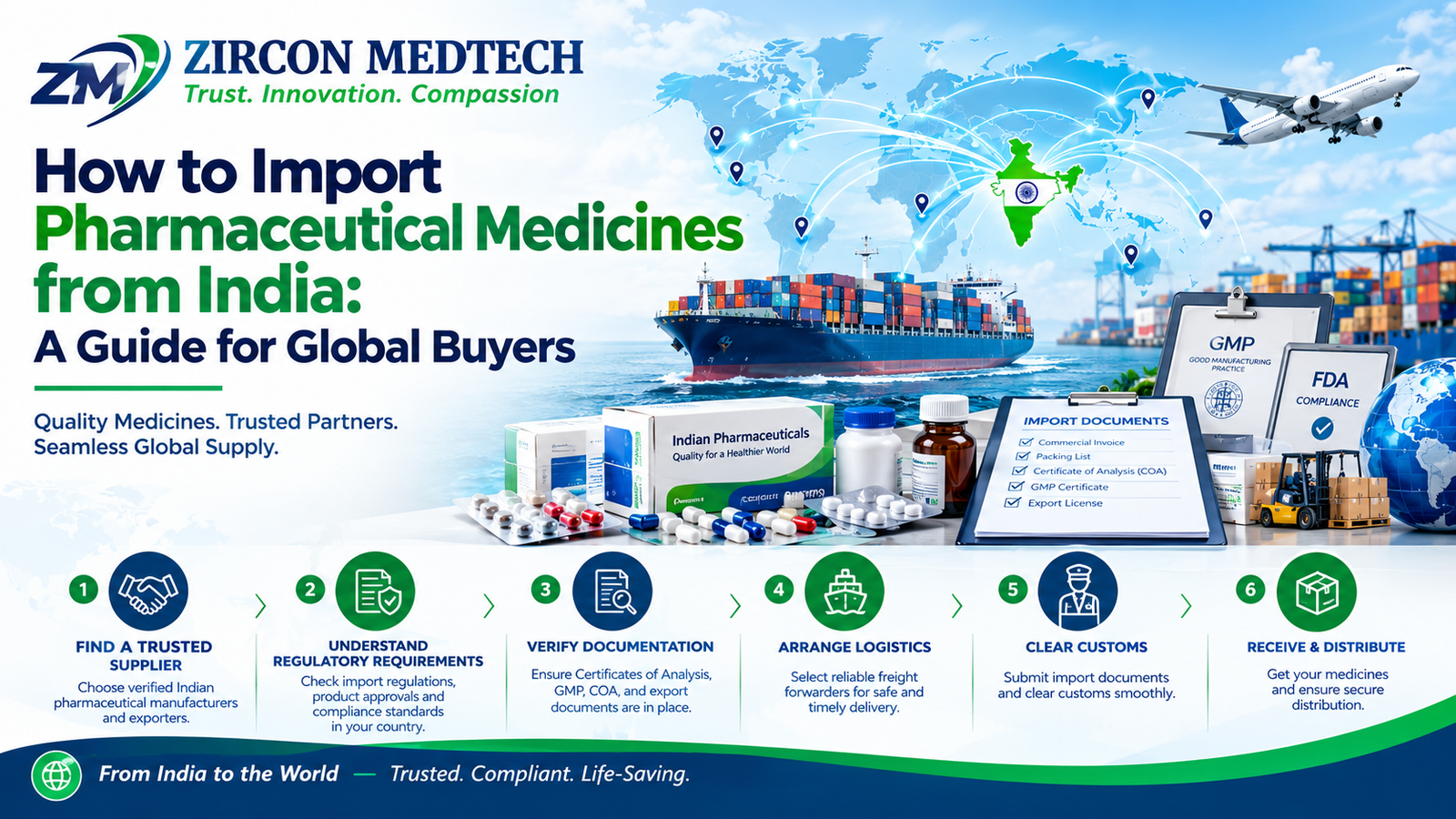
The exact requirements vary by destination and medicine. A product that is available for export from India may still need registration, an import permit, approved labelling, or other authorisation before it can be sold in the importing country.
This guide outlines a practical process for distributors, procurement teams, and other international buyers planning to source medicines from India.
1. Define the Medicines You Need
Start with a clear product specification before contacting suppliers. Include:
These details help suppliers confirm whether they can provide the right product and documentation.
2. Check the Rules in Your Destination Country
Before agreeing to a purchase, confirm the requirements with your country’s medicines regulator or a qualified local regulatory adviser.
Questions to resolve include:
Complete this check early. Product availability in India does not establish permission to import or market it elsewhere.
3. Verify the Indian Supplier and Manufacturer
Ask who manufactures the product, who holds the relevant licences, and who will act as the exporter. These may be different organisations.
Review the supplier’s business details, manufacturing authorisations, product range, quality processes, and ability to provide the documents required by your market. Indian exporters generally require an Importer-Exporter Code issued through the Directorate General of Foreign Trade.
If an export permission or No Objection Certificate applies to a particular product, confirm that the manufacturer has addressed the relevant CDSCO requirements. CDSCO publishes specific guidance for export NOCs, including guidance concerning certain unapproved, banned, or new drugs manufactured solely for export.
4. Review Manufacturing Quality
Ask for evidence relevant to the product and manufacturing site, such as current licences, GMP documentation, and quality agreements where appropriate.
Good Manufacturing Practice is a system for producing and controlling medicines consistently to quality standards. It addresses risks that cannot always be detected by testing the finished product alone.
Check that the documents relate to the actual manufacturing site and dosage form you intend to purchase. A general claim of “GMP quality” should be supported by verifiable documentation.
5. Request the Product Documentation
The document list should be agreed before the order is confirmed. Depending on the product and destination, buyers may need:
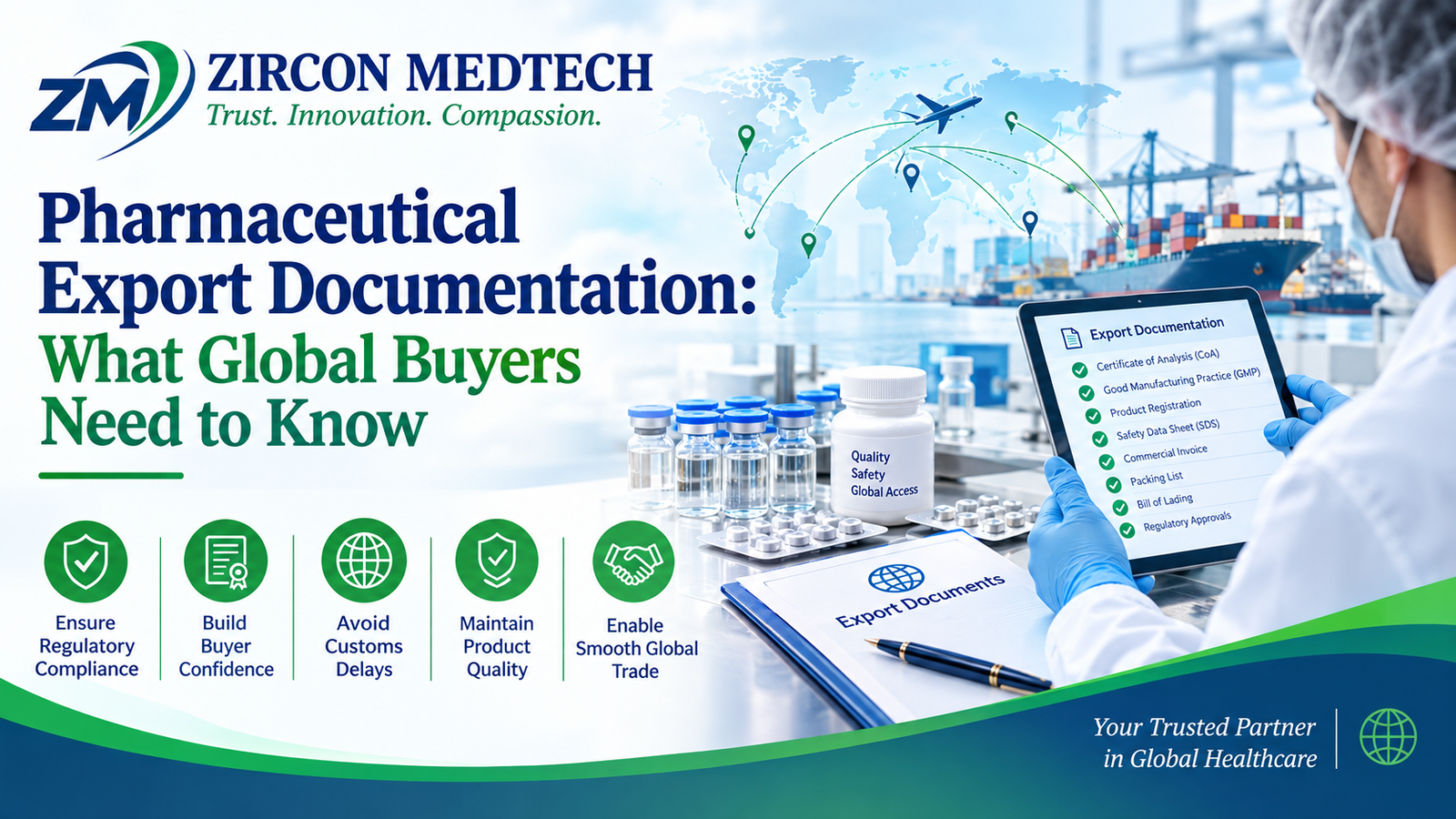
A Certificate of Pharmaceutical Product provides information about a specific product and its applicant in the exporting country. It is issued for a single product; buyers should confirm whether their destination regulator requires one and which details it must contain.
6. Agree on Commercial Terms Before Production or Dispatch
A clear purchase agreement helps avoid disputes and shipment delays. Confirm:
If the order requires market-specific packaging or documentation, confirm the final requirements before labels are printed or stock is allocated.
7. Plan Shipping and Storage Conditions
Medicines must be handled according to their approved storage conditions throughout transport.
Some products can travel under controlled ambient conditions, while others may require temperature-controlled shipping. Agree on packaging, monitoring, transit times, and the process for reviewing a temperature excursion before dispatch.
The buyer and supplier should also agree on who receives and checks the goods when they arrive.
8. Check the Shipment Documents
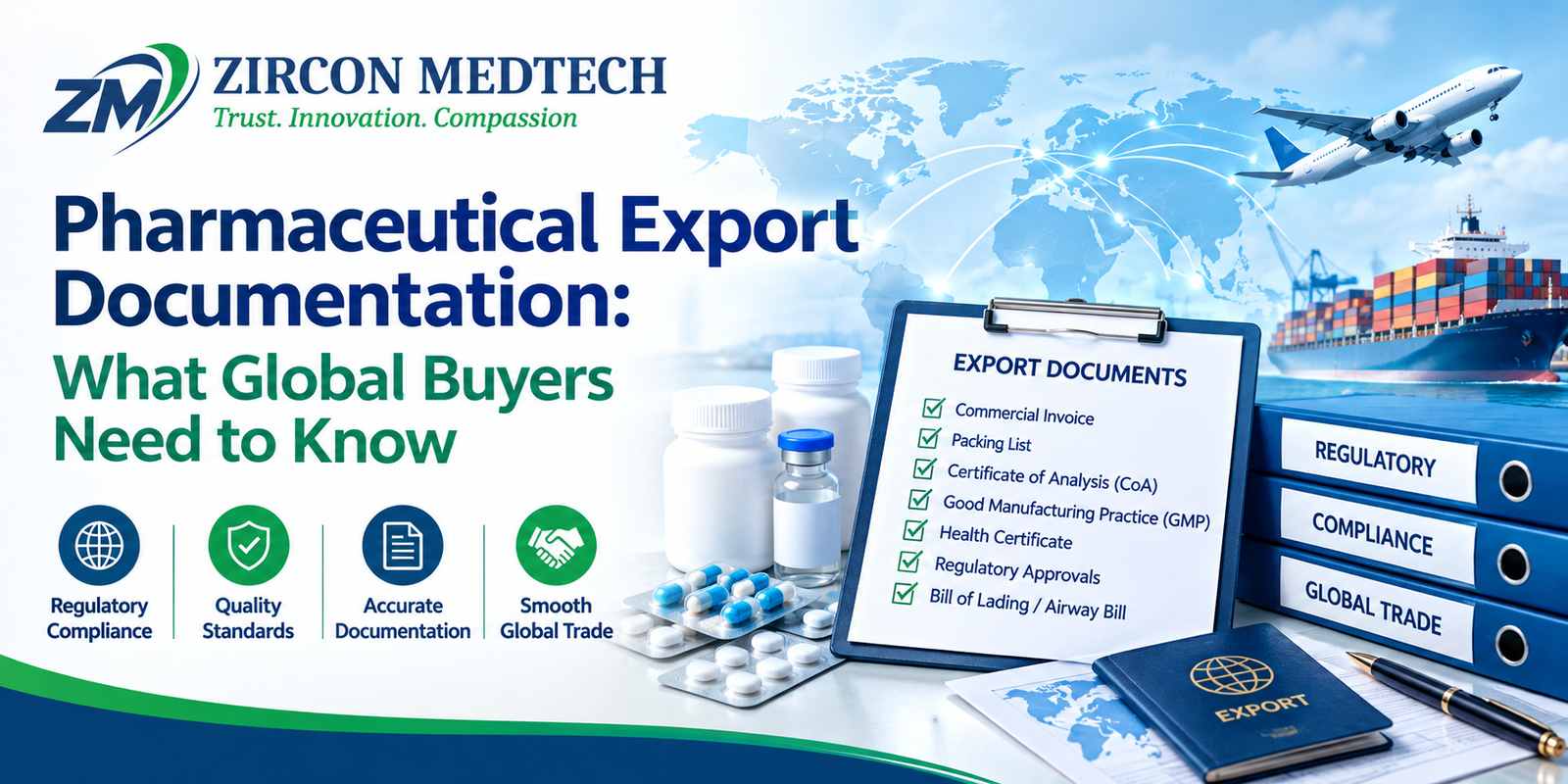
Document requirements vary, but a shipment may involve a commercial invoice, packing list, transport document, batch documents, and any required regulatory certificates or permits.
Check that product names, strengths, quantities, batch numbers, manufacturer details, and consignee information are consistent across the documents. A mismatch can delay clearance even when the physical shipment is correct.
9. Inspect the Medicines on Arrival
Receiving goods is an important quality step. Before releasing stock for distribution, check:
Record discrepancies and follow the agreed procedure for holding and assessing affected stock.
Common Mistakes Global Buyers Should Avoid
Addressing these points before purchase is usually easier than resolving them after a shipment has arrived.
Choosing a Pharmaceutical Export Partner in India
A reliable export partner should communicate clearly about product availability, manufacturing arrangements, documentation, quality requirements, and delivery timelines.
Ask potential partners how they handle document review, batch traceability, market-specific packaging, shipping conditions, and issues discovered after delivery. The right partner should be able to explain what they can supply and where the buyer must obtain local regulatory approval.
Final Thoughts
A successful pharmaceutical import begins with regulatory checks in the destination country and a precise product specification. From there, buyers can verify the Indian supplier, review manufacturing and batch documents, agree on shipping conditions, and inspect the goods on arrival.
Taking these steps in order helps global buyers reduce avoidable delays and make better-informed sourcing decisions.








Share This News