• info@zirconmedtech.in
  • +91 84600 39019
News Photo

Branded Generic Medicines from India: A Guide for International Distributors

Why Source Branded Generic Medicines from India?

India has extensive capabilities in pharmaceutical formulation, manufacturing, quality control, packaging, and international supply.

International distributors may consider Indian pharmaceutical suppliers because they can offer:

  • A broad range of pharmaceutical formulations
  • Multiple therapeutic categories
  • Established manufacturing infrastructure
  • Flexible product-portfolio options
  • Different packaging configurations
  • Private-label and contract-manufacturing capabilities
  • Regulatory and technical documentation support
  • Scalable production capacity
  • Experience with international markets
  • Competitive commercial opportunities

The suitability of a particular manufacturer or product still depends on the regulatory requirements of the destination country and the distributor’s commercial objectives.

What Are Branded Generic Medicines?

A generic medicine contains the same active ingredient as its corresponding reference medicine and is intended to provide the same therapeutic effect when used as approved.

A branded generic medicine is marketed under a specific trade or brand name rather than only under the generic name of its active ingredient.

For example, several companies may manufacture products containing the same active ingredient, strength, and dosage form, but each company may market its product under a different brand name.

Branded generics may include:

  • Tablets
  • Capsules
  • Oral liquids
  • Dry syrups
  • Creams and ointments
  • Eye or ear preparations
  • Inhalation products
  • Pharmaceutical injections
  • Other approved dosage forms

The availability of a product for export does not automatically mean that it can be sold in every country. Local registration or marketing authorisation may be required before importation and distribution.

Branded Generics vs Unbranded Generics

Both branded and unbranded generic medicines use established active pharmaceutical ingredients. The main difference is how they are marketed.

An unbranded generic product is generally sold using the name of its active ingredient. A branded generic is sold under a particular commercial name selected by the manufacturer or marketing company.

Branded products may offer distributors additional marketing opportunities, but they also require careful consideration of:

  • Brand-name availability
  • Trademark ownership
  • Local language requirements
  • Product positioning
  • Packaging design
  • Promotional rules
  • Market acceptance
  • Destination-country regulations

Distributors should complete appropriate trademark and regulatory checks before adopting or registering a pharmaceutical brand in a new market.

What International Distributors Should Check

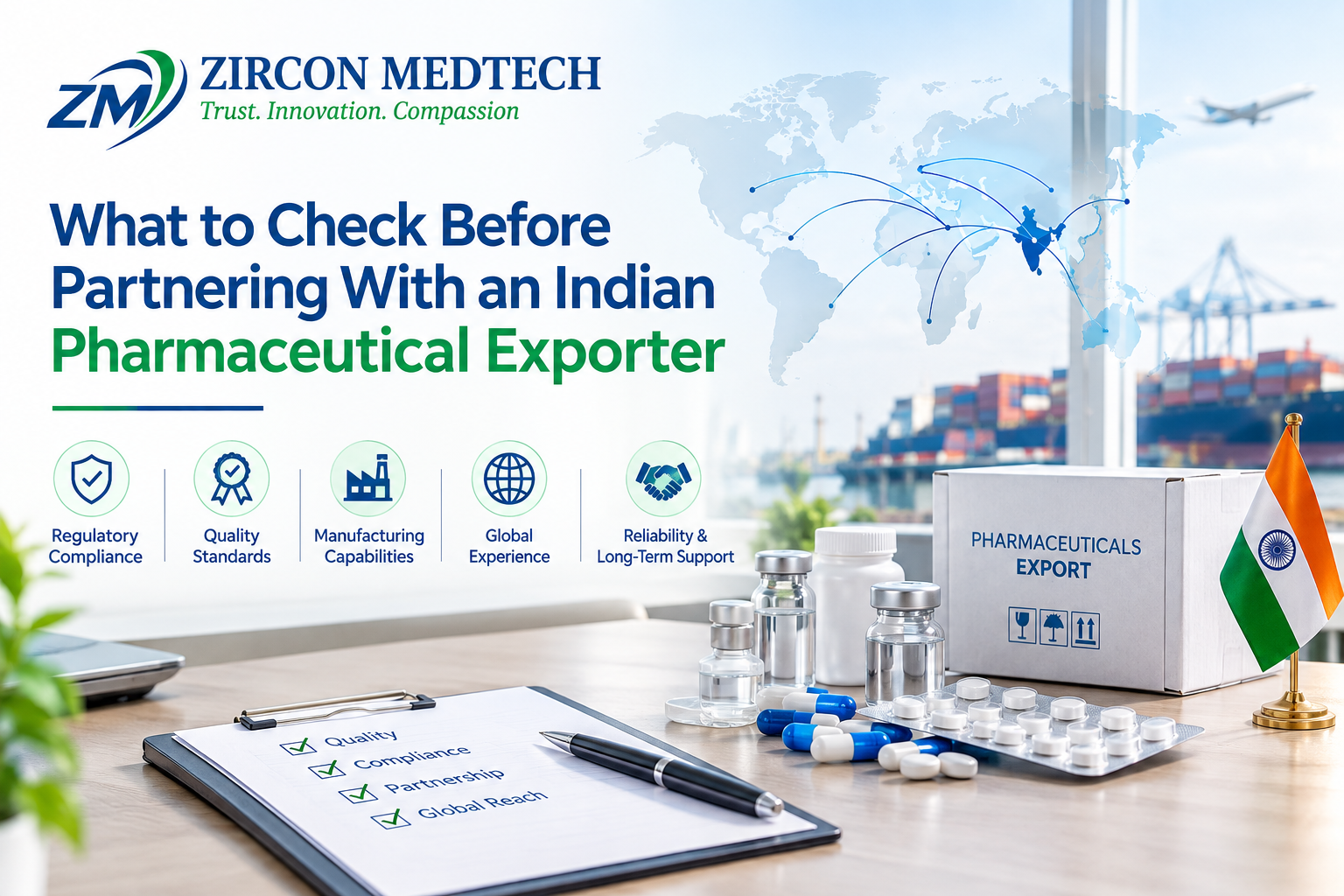
Before selecting branded generic medicines from an Indian supplier, international distributors should carefully evaluate several important factors.

  1. Manufacturing Quality and GMP Compliance
    Product quality begins with the manufacturing facility. Distributors should review the manufacturer’s applicable licences, Good Manufacturing Practice compliance, quality systems, production controls, and inspection history. The facility must also satisfy any specific requirements imposed by the destination country.
  2. Product Registration Status
    A medicine may need to be registered or authorised before it can be imported, promoted, or sold. Distributors should confirm whether the selected product is already registered in the destination country or whether a new application must be submitted.
  3. Product Composition and Specifications
    The active ingredient, strength, dosage form, excipients, specifications, and approved indications should be verified. The proposed product must correspond with the information submitted to the destination-country regulator.
  4. Regulatory Dossier Availability
    Product registration may require a technical dossier containing information about the formulation, manufacturing process, quality controls, analytical methods, stability, packaging, and product specifications. Distributors should determine what documentation the supplier can provide and whether it meets the local authority’s format.
  5. Quality-Control and Batch-Release Procedures
    Every commercial batch should undergo appropriate testing before release. Distributors should assess raw-material controls, in-process checks, finished-product testing, laboratory procedures, and quality-authorisation systems.
  6. Stability and Shelf-Life Information
    Stability data supports the proposed shelf life and storage conditions of a pharmaceutical product. The available studies should be relevant to the formulation, packaging system, and climate requirements of the destination market.
  7. Packaging and Labelling Capabilities
    Packaging and labels must comply with the target country’s rules. Distributors should confirm whether the supplier can accommodate required languages, product information, warnings, batch numbers, expiry dates, storage conditions, barcodes, and other mandatory details.
  8. Production Capacity and Lead Times
    The supplier should be capable of delivering the required volume within an agreed schedule. Distributors should review minimum order quantities, production capacity, material availability, manufacturing lead times, and procedures for urgent or repeat orders.
  9. Brand and Trademark Rights
    Before using a brand name, distributors should confirm who owns it and whether it can legally be used in the intended country. Trademark searches and written agreements can reduce the risk of future disputes.
  10. Export and Shipping Experience
    Pharmaceutical shipments may require specialised documentation, temperature controls, protective packaging, and coordinated customs procedures. Experience in supplying the destination country or region can be valuable.

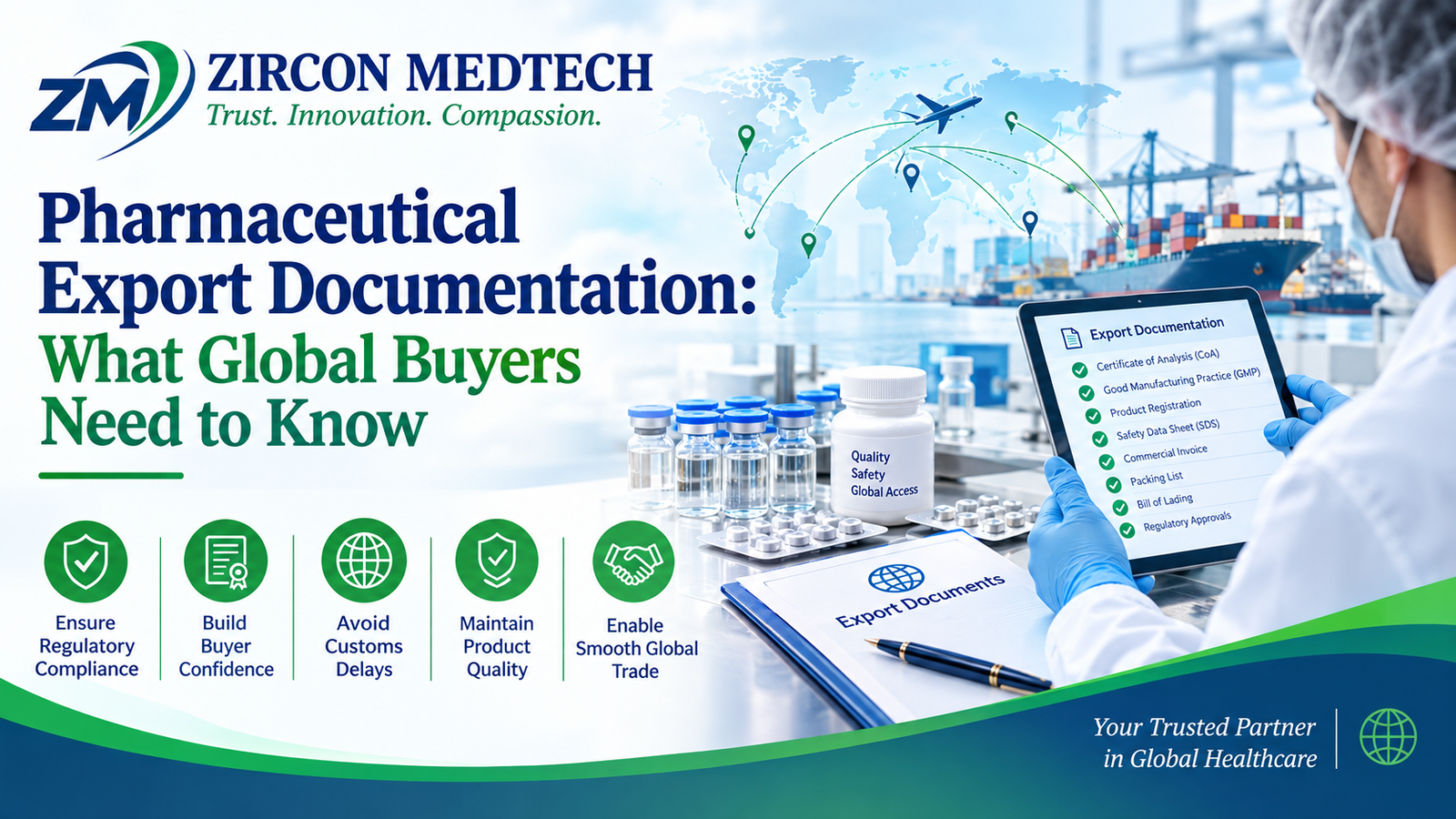
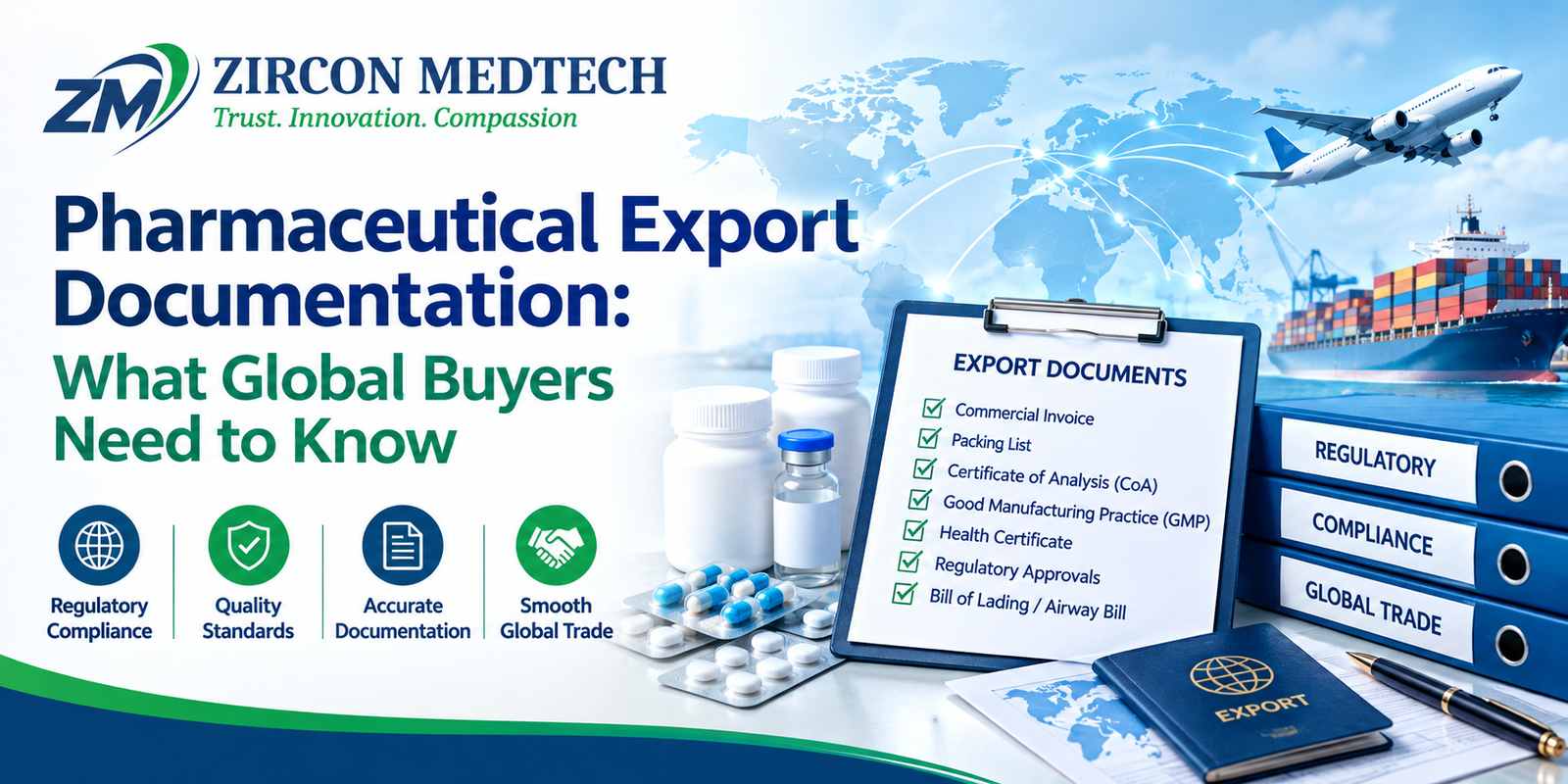
Important Pharmaceutical Documents to Review

The documentation required depends on the product, destination, and importing authority. International distributors may need to request or review:

  • Manufacturing licences
  • GMP-related documentation
  • Product permissions or approvals
  • Certificate of Analysis
  • Product specifications
  • Batch-manufacturing records where applicable
  • Stability information
  • Finished-product testing details
  • Free Sale Certificate where applicable
  • Certificate of Pharmaceutical Product where applicable
  • Product-registration dossier
  • Packaging and labelling artwork
  • Safety or product information
  • Country-of-origin documentation
  • Commercial invoice
  • Packing list
  • Shipping documents
  • Export documentation required for the shipment

Distributors should obtain a country-specific document checklist from the relevant regulatory authority or a qualified regulatory professional.

The availability of a document does not automatically confirm that it will be accepted by every authority. Documents may require legalisation, notarisation, apostille, translation, or another form of authentication.

Product Categories Available from Indian Manufacturers

Indian pharmaceutical manufacturers may offer branded generic products across therapeutic areas such as:

  • Anti-infective medicines
  • Cardiovascular medicines
  • Diabetes-management products
  • Gastrointestinal medicines
  • Pain-management products
  • Respiratory medicines
  • Dermatology products
  • Neurological medicines
  • Vitamins and nutritional products
  • Women’s healthcare products
  • Critical-care medicines
  • Oncology medicines
  • Hospital and institutional products

Product availability and export eligibility vary between manufacturers and markets.

International distributors should select products based on genuine market demand, applicable registration pathways, clinical use, competition, price, and supply-chain feasibility.

How Product Registration Affects Distribution

Pharmaceutical product registration is usually one of the most important steps in international distribution.

Depending on the country, the registration process may involve:

  • Submitting administrative documents
  • Providing information about the manufacturer
  • Supplying the product dossier
  • Reviewing formulation and specifications
  • Evaluating stability information
  • Approving packaging and labelling
  • Inspecting the manufacturing site
  • Providing samples for testing
  • Paying application or evaluation fees
  • Responding to regulatory queries

Registration timelines vary considerably between markets.

Distributors should not place large commercial orders until they understand the applicable approval process and confirm when the product can legally be imported and sold.

Packaging and Labelling for International Markets

Pharmaceutical packaging protects the medicine during storage, transportation, and use. It also communicates essential information to healthcare professionals, patients, distributors, and regulators.

Market-specific packaging may need to include:

  • Brand name
  • Generic or active-ingredient name
  • Product strength
  • Dosage form
  • Pack size
  • Composition
  • Directions or approved product information
  • Storage requirements
  • Warnings and precautions
  • Batch number
  • Manufacturing date
  • Expiry date
  • Manufacturer details
  • Importer or distributor details
  • Registration number
  • Barcode or serialisation information
  • Required local language

Artwork should be reviewed and approved by the responsible parties before printing.

Using packaging intended for one country in another market may create regulatory, language, or product-information problems.

Quality Assurance and Batch Consistency

International distributors need confidence that each supplied batch meets the approved specifications.

A suitable quality-management system should address:

  • Supplier qualification
  • Raw-material testing
  • In-process quality checks
  • Finished-product testing
  • Equipment qualification
  • Process validation
  • Cleaning procedures
  • Data integrity
  • Deviation management
  • Change control
  • Complaint handling
  • Product recalls
  • Corrective and preventive action
  • Batch release
  • Record retention

Distributors may also establish a quality agreement defining the responsibilities of the manufacturer, exporter, marketing company, and local distributor.

Evaluating Samples Before Commercial Orders

Product samples can help distributors review the proposed product before placing a commercial order.

A sample assessment may examine:

  • Physical appearance
  • Dosage form
  • Pack size
  • Packaging quality
  • Label information
  • Brand presentation
  • Product specifications
  • Certificate of Analysis
  • Remaining shelf life
  • Storage requirements
  • Patient-information materials

Samples should be evaluated through appropriate quality and regulatory procedures. Visual inspection alone cannot confirm pharmaceutical quality, safety, or regulatory compliance.

Commercial Factors Distributors Should Consider

In addition to quality and regulatory requirements, distributors should assess the commercial viability of each product.

Important considerations include:

  • Market demand
  • Competitor products
  • Local selling prices
  • Distributor margins
  • Registration expenses
  • Import duties and taxes
  • Freight and insurance costs
  • Minimum order quantities
  • Payment terms
  • Currency risks
  • Promotional expenses
  • Warehousing costs
  • Remaining shelf life on arrival
  • Expected sales volume
  • Product-return arrangements

A low manufacturing price does not necessarily result in a commercially successful product. The complete landed cost and expected market performance should be evaluated.

Supply-Chain and Logistics Requirements

Pharmaceutical products must be protected throughout transportation and storage.

The supply-chain plan should consider:

  • Required storage temperature
  • Humidity and light protection
  • Transit duration
  • Shipping route
  • Packaging durability
  • Temperature monitoring where required
  • Customs-clearance procedures
  • Warehouse conditions
  • Stock rotation
  • Batch traceability
  • Product security
  • Contingency planning

Some products require specialised cold-chain transportation. Others may remain stable at controlled room temperature but still need protection from excessive heat, moisture, or direct sunlight.

The required conditions should be based on the approved product information and available stability data.

Private-Label and Distributor-Brand Opportunities

Some Indian pharmaceutical manufacturers may support private-label or distributor-brand arrangements.

Under this model, products may be supplied using a brand selected or owned by the distributor, subject to regulatory approval and commercial agreement.

Before proceeding, the parties should clearly define:

  • Ownership of the brand
  • Trademark responsibilities
  • Product-registration ownership
  • Artwork approval
  • Manufacturing responsibilities
  • Quality responsibilities
  • Minimum order quantities
  • Market exclusivity
  • Territory rights
  • Pricing and payment terms
  • Confidentiality requirements
  • Procedures for complaints and recalls

Private-label manufacturing can support market differentiation, but it requires clear contractual, regulatory, and quality arrangements.

Managing Pharmaceutical Supply Risks

International pharmaceutical distribution can be affected by manufacturing delays, material shortages, regulatory changes, shipping disruptions, and variations in market demand.

Distributors can reduce these risks by:

  • Maintaining realistic demand forecasts
  • Confirming production schedules early
  • Monitoring inventory levels
  • Holding appropriate safety stock
  • Reviewing supplier performance
  • Qualifying alternative products or suppliers where appropriate
  • Maintaining complete documentation
  • Monitoring regulatory changes
  • Agreeing on communication procedures
  • Planning for complaints and recalls
  • Checking remaining shelf life before shipment
  • Reviewing transportation arrangements

Risk-management measures should match the importance of the medicine and the needs of the destination market.

Choosing the Right Indian Pharmaceutical Supplier

The right supplier should be assessed on quality, regulatory capability, supply reliability, and long-term commercial suitability.

International distributors should evaluate:

  • Manufacturing licences and applicable GMP compliance
  • Experience with branded generic medicines
  • Product range and dosage-form capabilities
  • Quality-control and batch-release systems
  • Regulatory dossier support
  • Stability data
  • Packaging and labelling capabilities
  • Production capacity
  • Minimum order quantities
  • Lead times
  • Export-market experience
  • Pharmaceutical documentation
  • Logistics support
  • Communication and responsiveness
  • Complaint and recall procedures
  • Commercial terms
  • Brand and territory arrangements

A distributor may also conduct a quality audit or appoint a qualified third party to evaluate the manufacturing facility where appropriate.

How Branded Generics Support International Market Expansion

Branded generic medicines can help distributors broaden their portfolios and serve different healthcare sectors, including retail pharmacies, hospitals, clinics, wholesalers, and institutional buyers.

A properly planned branded-generic strategy may allow distributors to:

  • Build a recognisable pharmaceutical portfolio
  • Introduce products in selected therapeutic categories
  • Serve local healthcare requirements
  • Develop relationships with healthcare channels
  • Expand into additional regions
  • Strengthen long-term supplier partnerships
  • Create differentiated product offerings

Successful expansion depends on more than product availability. Regulatory approval, consistent quality, market demand, professional promotion, responsible distribution, and reliable supply must work together.

Final Thoughts

India offers international distributors access to a broad pharmaceutical manufacturing base and a wide selection of branded generic medicines.

However, selecting products only on the basis of price or catalogue availability can create quality, registration, branding, and supply-chain risks. Distributors should carefully evaluate the manufacturer, product dossier, batch documentation, stability support, packaging capabilities, trademark position, and destination-country requirements.

Clear agreements should establish responsibilities for manufacturing, quality assurance, product registration, artwork approval, shipment, complaints, recalls, and ongoing supply.

For international distributors exploring branded generic medicines from India, working with an experienced pharmaceutical manufacturer and exporter can provide a structured pathway towards product sourcing, regulatory coordination, brand development, and long-term market expansion.

Note: Pharmaceutical registration, importation, advertising, and distribution requirements vary by country. Distributors should obtain guidance from the relevant national authority and qualified regulatory professionals before importing or marketing any medicine.
Share This News

Comment

Do you want to get our quality service for your business?