

OFFICE NO 5 & 6, 3RD FLOOR,
EARTH ALPHA COMPLEX
VASNA BHAYLI RD, VADODARA
GUJARAT, INDIA

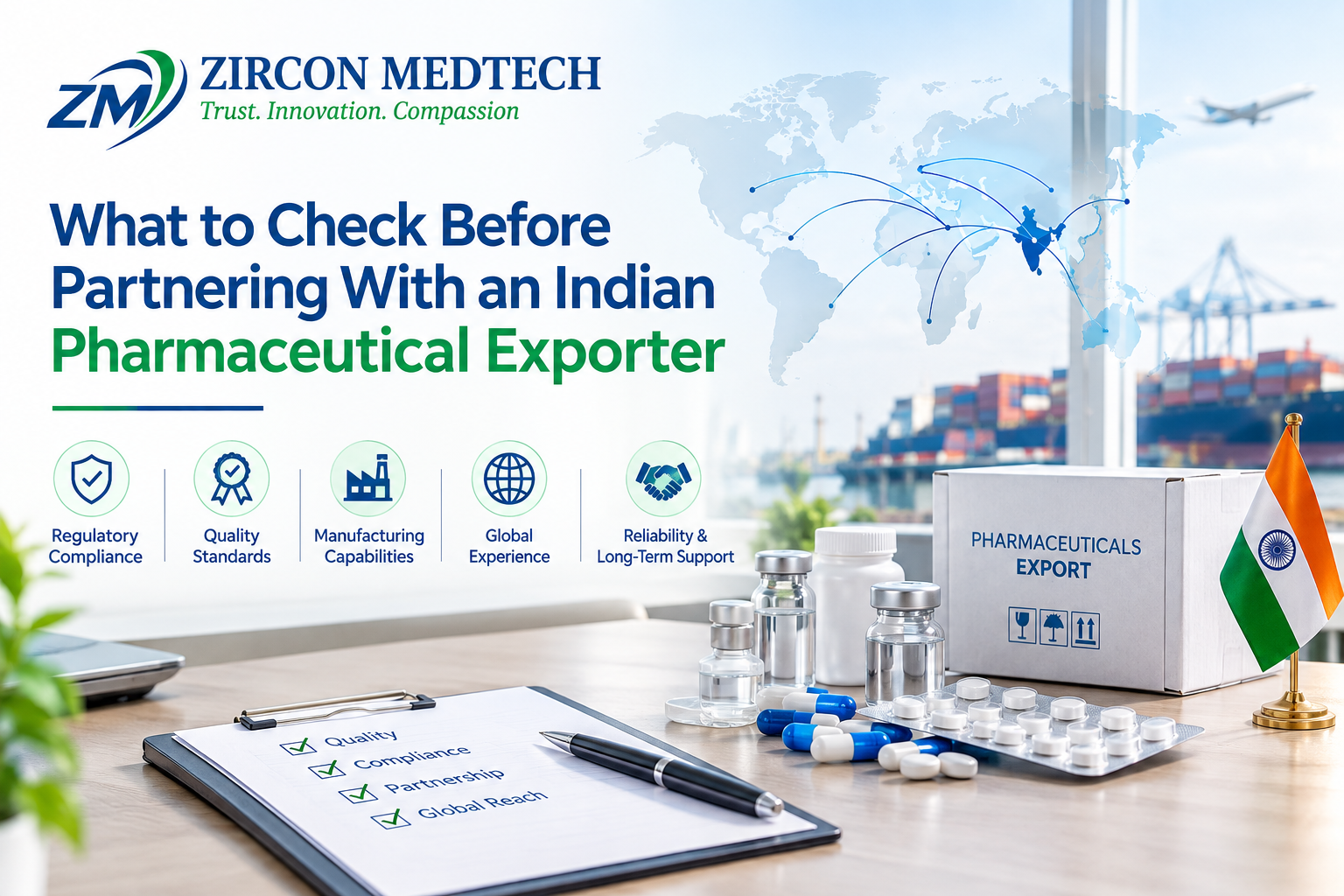
Why Choosing the Right Pharmaceutical Exporter Matters
Pharmaceutical products directly affect patient health and safety. Problems involving quality, documentation, storage, packaging, or delivery can have serious commercial and regulatory consequences.
An unsuitable supplier may cause:
A professional exporter should understand that pharmaceutical exports require accuracy at every stage—from product selection and documentation to packaging and final shipment.
The right export partner should be capable of supporting the buyer throughout the complete sourcing process.
What Buyers Should Check Before Partnering With an Indian Pharmaceutical Exporter
International buyers should evaluate the following factors before placing an order or entering into a long-term agreement.
1. Company Background and Export Experience
Begin by reviewing the exporter’s business history and experience in international pharmaceutical trade.
Check whether the company has previously supplied products to overseas markets and understands the expectations of international buyers.
Important questions may include:
An exporter with relevant experience may be better prepared to manage documentation, logistics, regulatory communication, and unexpected supply-chain challenges.
2. Product Quality
Quality should be one of the most important considerations when selecting a pharmaceutical exporter.
Buyers should request clear information about the products, manufacturers, specifications, testing procedures, and applicable quality systems.
Important quality-related information may include:
Documentation should be checked carefully rather than accepted without review.
Consistent product quality is essential for protecting patients, meeting buyer requirements, and maintaining confidence within the destination market.
3. Manufacturing Standards
Buyers should understand where and how the pharmaceutical products are manufactured.
The exporter should be able to provide relevant information about the manufacturing facility and the quality standards followed during production.
Depending on the product and destination market, buyers may need to review:
Buyers should verify whether the manufacturing standards and supporting evidence are acceptable to the relevant authorities in their destination country.
4. Regulatory Knowledge
Pharmaceutical regulations differ between countries.
A product that can be supplied in one market may require different registrations, approvals, labelling, documentation, or packaging in another.
Before selecting an exporter, buyers should assess whether the company understands the requirements of the intended market.
A knowledgeable pharmaceutical exporter should be able to discuss:
The buyer remains responsible for confirming applicable import and regulatory requirements with qualified professionals and relevant authorities.
However, an experienced exporter should be able to provide accurate product information and cooperate throughout the compliance process.
5. Product Range and Availability
An exporter should have access to the pharmaceutical products required by the buyer.
Depending on the market, buyers may need:
A broad product range can make sourcing more convenient, but product availability should always be confirmed before an order is finalised.
Buyers should ask about minimum order quantities, production lead times, pack sizes, shelf life, and the availability of repeat orders.
6. Documentation Capabilities
Accurate documentation is essential in pharmaceutical exports.
Missing or incorrect documents can delay customs clearance, prevent product registration, interrupt distribution, or cause a shipment to be rejected.
Depending on the product and destination country, buyers may require:
Document requirements vary by country and product. Buyers should confirm the required documents with the appropriate regulatory and customs authorities before placing an order.
The exporter should provide documents accurately, consistently, and within the agreed timeframe.
7. Packaging and Labelling
Pharmaceutical products require suitable packaging to protect them during storage, handling, and international transportation.
Buyers should confirm:
Any custom packaging or labelling requirements should be discussed and approved before production or dispatch.
Clear written approval can help prevent errors and misunderstandings.
8. Shelf Life and Storage Requirements
Available shelf life is an important consideration, especially for international orders that require time for transportation, customs clearance, distribution, and final sale.
Before ordering, buyers should confirm:
Products requiring controlled temperatures or special storage conditions may need additional logistics planning.
The exporter should communicate these requirements clearly before shipment.
9. Supply Capacity and Reliability
A supplier may offer suitable products but still struggle to maintain consistent availability.
Before forming a partnership, buyers should evaluate whether the exporter can support the expected order volume and delivery schedule.
Discuss:
Reliable supply is especially important for medicines that hospitals, distributors, pharmacies, and patients require continuously.
The exporter should avoid making delivery commitments that cannot be met.
10. Pricing Transparency
Price is important, but the lowest quotation may not always represent the best value.
Buyers should request a clear commercial quotation explaining:
Unexpected expenses can create disputes later in the transaction.
A professional exporter should communicate commercial terms clearly and confirm what is included in the quoted price.
11. Payment Terms and Commercial Security
Payment terms should be reviewed carefully before placing an order.
Buyers and exporters should agree on:
Company and banking information should be independently verified through appropriate business channels.
Important commercial conditions should be documented in writing rather than relying only on informal conversations.
12. Communication and Responsiveness
Clear communication is essential when working across different countries, time zones, and regulatory environments.
A dependable exporter should:
Poor communication before an order may indicate larger problems after payment or during shipment.
Buyers should choose an export partner that communicates accurately rather than simply responding quickly.
13. Shipping and Logistics Experience
Pharmaceutical shipping requires careful coordination.
The exporter should understand the logistics requirements associated with the products being supplied.
Buyers should discuss:
The responsibilities of the buyer and exporter should be clearly defined through agreed commercial terms.
14. Samples and Initial Orders
Where legally and commercially appropriate, requesting product information, samples, or a smaller initial order may help buyers evaluate a potential supplier before making a larger commitment.
An initial order can help assess:
Buyers should still follow all applicable import, customs, and regulatory requirements for samples and small orders.
15. References and Business Reputation
A buyer should conduct proper due diligence before entering into a partnership.
Useful checks may include:
No single document should be treated as complete proof of reliability.
Buyers should compare information from multiple credible sources before making a decision.
Warning Signs Buyers Should Not Ignore
International buyers should proceed carefully if an exporter:
A professional exporter should welcome reasonable due-diligence questions and provide clear, verifiable information.
Questions to Ask a Potential Pharmaceutical Exporter
Before confirming a partnership, buyers can ask:
Clear answers can help buyers compare potential suppliers more effectively.
Building a Long-Term Pharmaceutical Export Partnership
A successful pharmaceutical export relationship requires more than completing one shipment.
Both parties should maintain clear communication, accurate documentation, realistic timelines, and consistent quality expectations.
A long-term exporter should be willing to:
Regular performance reviews can help buyers identify problems early and strengthen the partnership over time.
Why the Right Indian Pharmaceutical Exporter Matters
Partnering with an Indian pharmaceutical exporter can provide access to a wide range of pharmaceutical products and established manufacturing capabilities.
However, buyers should not select a supplier based only on product price or availability.
The decision should consider:
Careful due diligence helps international buyers reduce supply-chain risks and identify an export partner capable of supporting their long-term business requirements.
For pharmaceutical importers, distributors, hospitals, and global healthcare companies, selecting a dependable Indian exporter is an important step toward creating a secure and sustainable supply chain.








Share This News