OFFICE NO 5 & 6, 3RD FLOOR,
EARTH ALPHA COMPLEX
VASNA BHAYLI RD, VADODARA
GUJARAT, INDIA

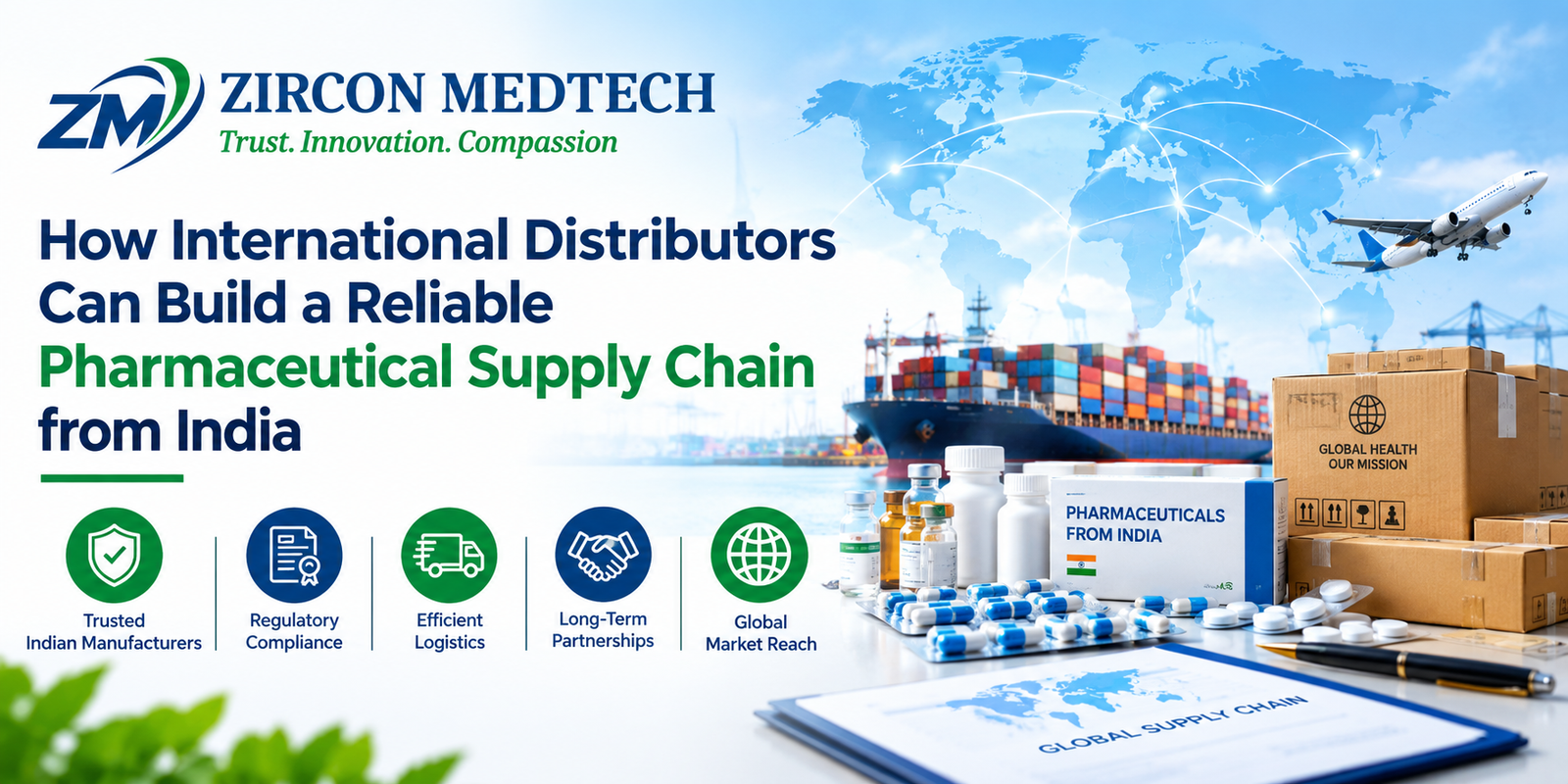
International distributors must also confirm that products meet the requirements of their destination market and that quality is maintained from manufacture through storage, transport and delivery.
A dependable supply chain begins with careful supplier evaluation. Distributors should verify the manufacturer’s identity, facility address, manufacturing licence, GMP documentation and the specific products and dosage forms covered by its approvals.
A manufacturer authorised to produce tablets may not necessarily be authorised to produce sterile injections or other specialised medicines. Distributors should check the scope of the relevant documents rather than relying on a general statement that a facility is “GMP approved.”
Product evaluation is equally important. Before placing an order, distributors should confirm the formulation, strength, specifications, proposed packaging, shelf life and documentation needed to register or import the medicine in the destination country.
Useful documents may include a manufacturing licence, GMP certificate, Certificate of Analysis, Certificate of Pharmaceutical Product where applicable, product specifications and stability information. The exact documents required will depend on the product and the importing country.
Regulatory requirements should be confirmed before commercial commitments are made. Permission to manufacture or export a medicine from India does not, by itself, grant permission to import or sell it in another country. Destination markets may have separate requirements for product registration, import authorisation, labelling and manufacturing-site approval. WHO guidance addresses quality assurance in pharmaceutical procurement and import procedures as separate parts of the supply chain.
Distributors should also assess whether the supplier can deliver consistently. Production capacity, lead times, raw-material availability and minimum order quantities can all affect the ability to fulfil repeat orders.
Clear written agreements help both parties manage these expectations. They should identify who is responsible for product specifications, document updates, packaging approval, shipment arrangements, complaints, recalls and communication when a quality issue occurs.
Quality controls must continue after the product leaves the manufacturing facility. Medicines may face risks during handling, storage, repackaging and transport. WHO’s good storage and distribution guidance addresses these stages because product quality can be affected throughout the supply chain. who.int
For temperature-sensitive medicines, distributors should confirm the required storage conditions and agree on suitable packaging, transport and monitoring arrangements. They should also know how a temperature excursion will be reported, assessed and resolved.
Batch traceability is another essential control. Purchase records, batch numbers, expiry dates, shipping documents and delivery records should allow a distributor to identify where each batch came from and where it was supplied.
This information becomes particularly important when investigating a complaint, checking a suspected quality defect or coordinating a product recall.
A reliable supply chain also needs a process for managing change. If a manufacturer changes a production site, product specification, packaging component or other relevant detail, the distributor may need to review the effect on registration and supply in its market before accepting further shipments.
Supplier evaluation should therefore continue after the first successful order. Periodic document checks, performance reviews and, where appropriate, supplier audits can help distributors identify recurring delivery problems, quality concerns or expired approvals.
International distributors should also avoid depending entirely on informal assurances. Written specifications, verified documents and agreed procedures provide a clearer basis for decisions when delays or unexpected issues arise.
A strong pharmaceutical supply chain is built through verified suppliers, suitable products, clear regulatory planning, controlled distribution and ongoing oversight.
By checking each of these areas before and during the partnership, international distributors can reduce avoidable supply risks and build a more dependable route for pharmaceutical products from India to their destination markets.








Share This News