OFFICE NO 5 & 6, 3RD FLOOR,
EARTH ALPHA COMPLEX
VASNA BHAYLI RD, VADODARA
GUJARAT, INDIA

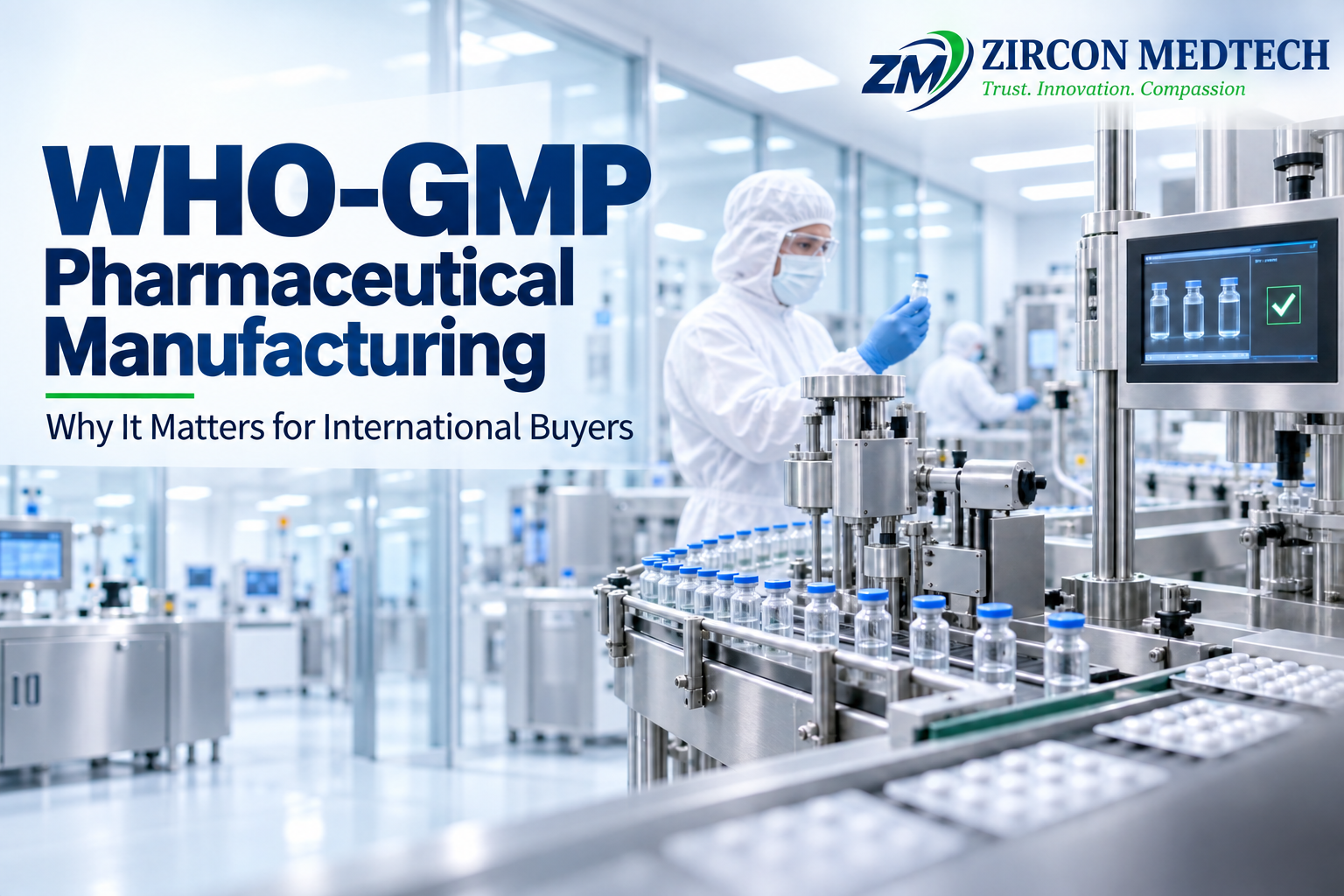
For international pharmaceutical buyers, distributors, importers and healthcare organisations, sourcing products from a WHO-GMP-compliant manufacturing facility can provide greater confidence in product quality, manufacturing controls and batch consistency.
Good Manufacturing Practices cover important areas such as raw-material sourcing, facility hygiene, employee training, equipment maintenance, production procedures, quality testing, documentation, packaging and product storage.
These controls help reduce pharmaceutical manufacturing risks such as contamination, product mix-ups, incorrect labelling and inconsistent product quality.
International buyers should, however, understand that the term “WHO-GMP certified” does not always mean that the World Health Organization directly inspected or certified the manufacturing facility.
In many countries, the relevant national regulatory authority inspects pharmaceutical facilities and issues GMP certificates based on requirements aligned with WHO guidelines.
Before selecting a pharmaceutical manufacturer, buyers should verify the authenticity, validity and scope of the GMP certificate. The certificate should clearly identify the facility address, approved dosage forms, manufacturing activities, issuing authority and validity period.
A facility approved for manufacturing tablets and capsules may not automatically be authorised to manufacture sterile injections, oncology medicines or other specialised pharmaceutical products.
Buyers should also review the manufacturer’s quality-management system, laboratory capabilities, raw-material controls, validation procedures, production capacity, documentation standards and product-recall processes.
Important documents may include the GMP certificate, manufacturing licence, Certificate of Analysis, Certificate of Pharmaceutical Product, product specifications, stability data, validation reports and batch-manufacturing records.
The World Health Organization’s Certification Scheme on the Quality of Pharmaceutical Products Moving in International Commerce also helps participating countries assess the quality and regulatory status of pharmaceutical products in international trade.
However, WHO-GMP compliance does not automatically provide permission to sell a pharmaceutical product in every country.
Each destination market may have separate requirements relating to product registration, import licences, stability studies, packaging, labelling, pharmacovigilance and manufacturing-site approval.
International buyers should therefore confirm the regulatory requirements of the importing country before placing a commercial order.
Working with a properly evaluated WHO-GMP pharmaceutical manufacturer can help buyers improve product traceability, maintain quality standards, support regulatory documentation and reduce supply-chain risks.
Regular supplier audits and document reviews are also essential because a GMP certificate represents compliance within a defined scope and inspection period.
For global pharmaceutical companies, WHO-GMP manufacturing is more than a certification requirement. It is an important part of establishing a safe, transparent and dependable pharmaceutical supply chain.
Selecting the right manufacturing and export partner can help international buyers obtain quality pharmaceutical products while meeting the regulatory expectations of their target markets.








Share This News