
OFFICE NO 5 & 6, 3RD FLOOR,
EARTH ALPHA COMPLEX
VASNA BHAYLI RD, VADODARA
GUJARAT, INDIA

Why Choose Pharmaceutical Contract Manufacturing in India?
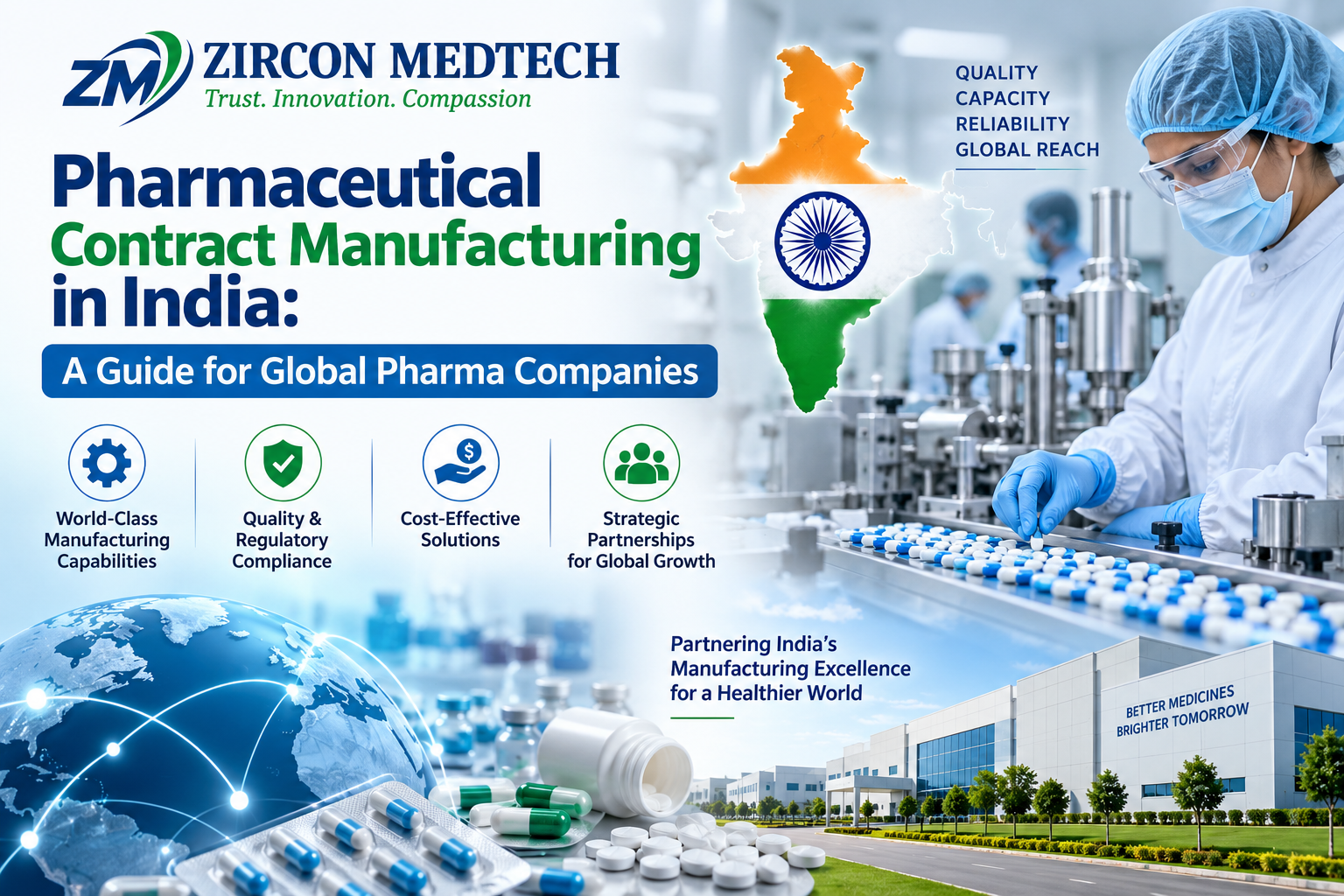
India has a well-developed pharmaceutical manufacturing ecosystem covering a wide range of formulations and dosage forms. Indian manufacturers serve domestic and international markets and have experience working with different regulatory and quality requirements.
For global pharmaceutical companies, partnering with an Indian contract manufacturer can provide access to established production infrastructure, technical expertise, quality-control systems, and scalable manufacturing capabilities. This model can be particularly useful for companies looking to introduce products into new markets or expand their existing pharmaceutical portfolios.
What Is Pharmaceutical Contract Manufacturing?
Pharmaceutical contract manufacturing is a business arrangement in which a pharmaceutical company partners with an external manufacturer to produce medicines or pharmaceutical formulations on its behalf. The manufacturing partner produces the agreed products according to predefined specifications, quality requirements, packaging standards, and applicable regulatory guidelines.
Depending on the partnership, a contract manufacturer may support activities such as formulation development, manufacturing, quality testing, packaging, labeling, documentation, and batch production. The exact responsibilities are established between the pharmaceutical company and manufacturing partner through appropriate commercial and technical agreements.
What Global Pharma Companies Should Check
Before selecting an Indian pharmaceutical contract manufacturing partner, global companies should carefully evaluate several important factors.
How Pharmaceutical Contract Manufacturing Supports Global Expansion
Pharmaceutical contract manufacturing can help companies expand their product portfolios and enter international markets without making the substantial investment required to establish their own manufacturing infrastructure.
By working with an experienced manufacturing partner, companies can potentially streamline production, access established pharmaceutical facilities, and focus their internal resources on areas such as marketing, distribution, regulatory strategy, and market development.
However, successful international pharmaceutical manufacturing requires close coordination between the product owner and manufacturer. Regulatory requirements, product specifications, quality standards, production schedules, packaging requirements, and documentation should be clearly established before commercial manufacturing begins.
Regulatory Considerations for International Markets
Pharmaceutical regulations differ between countries and regions. A product manufactured in India may require additional registration, approval, testing, or documentation before it can be marketed in another country.
Global pharmaceutical companies should therefore determine the regulatory requirements of their target market at an early stage. Depending on the product and destination, requirements may involve product registration dossiers, manufacturing information, stability data, certificates, labeling documentation, and other regulatory submissions.
Working with a pharmaceutical partner that understands international documentation and regulatory processes can help companies coordinate manufacturing activities with their market-entry requirements.
Choosing the Right Pharmaceutical Contract Manufacturing Partner
Selecting a suitable contract manufacturing partner is an important part of developing a successful pharmaceutical supply chain. Global companies should assess both manufacturing capabilities and the partner's ability to support long-term commercial requirements.
Companies should evaluate:
India's established pharmaceutical manufacturing ecosystem provides global companies with access to experienced manufacturing infrastructure and a broad range of pharmaceutical capabilities. With the right manufacturing partner, companies can develop reliable production arrangements while meeting applicable quality, regulatory, and supply-chain requirements for their target markets.
For global pharmaceutical companies exploring pharmaceutical contract manufacturing in India, working with an experienced partner can provide a structured pathway toward product manufacturing, regulatory coordination, and international market expansion.








Share This News