
OFFICE NO 5 & 6, 3RD FLOOR,
EARTH ALPHA COMPLEX
VASNA BHAYLI RD, VADODARA
GUJARAT, INDIA

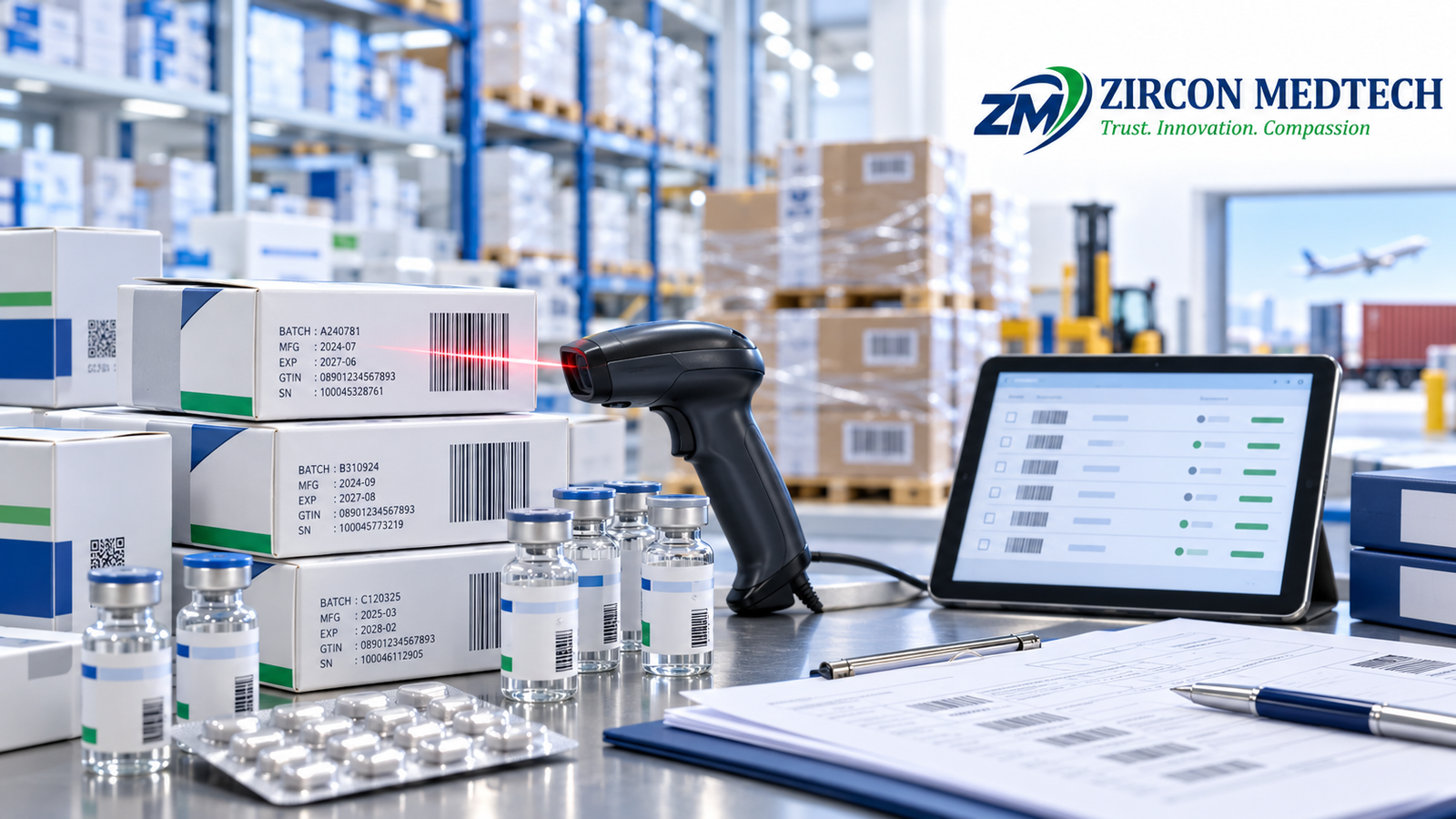
What Is Batch Traceability in Pharmaceutical Exports?
Batch traceability is the ability to retrieve information about a medicine batch’s manufacturing and distribution history.
A batch number identifies a particular batch. WHO guidance describes it as an identifier connecting a batch with its labels, batch records and corresponding Certificates of Analysis.
However, printing a batch number on a carton does not create a complete traceability system. The identifier must connect to reliable records showing the product’s source, receipt, storage and onward supply.
For an international transaction, buyers should be able to establish:
These connections make the records useful when a specific batch needs to be located or investigated.
Why Batch Traceability Matters for International Buyers
International pharmaceutical supply involves handovers between organisations. Without consistent records, it can become difficult to determine which batches were received, where they were stored or which customers received them.
Traceability helps buyers maintain visibility across these handovers.
The European Medicines Agency explains that traceability records should support efficient incident investigations and recalls of potentially defective products.
Key Benefits:
Traceability supports quality oversight, but it does not independently prove that a medicine is authentic, compliant or suitable for sale in the destination market.
Information Buyers Should Request Before Shipment
Buyers should agree on the batch information required before dispatch. This gives both parties time to identify missing records or inconsistent details.
1. Complete Product Identification
Confirm the medicine’s:
A batch number should be interpreted alongside this information. Buyers should not assume that a batch identifier is globally unique across all manufacturers and products.
2. Batch Numbers and Quantities
Ask the exporter to identify each batch included in the shipment and the quantity supplied from it.
If an order contains several batches, the records should distinguish them clearly. A total shipment quantity alone may be insufficient for later reconciliation.
3. Manufacturing and Expiry Details
Confirm the relevant manufacturing and expiry information for each batch.
Agree on the minimum remaining shelf life expected at delivery, accounting for transport, clearance and local distribution.
4. Batch Quality Documentation
Request the batch-specific Certificate of Analysis and other release evidence appropriate to the transaction.
Confirm that the documents correspond to the product and batch being supplied. A generic specification sheet describes requirements but does not establish the test results for a particular batch.
5. Supply-Chain Records
Establish how the exporter obtained the medicines and whether it can demonstrate an appropriate supply relationship.
Buyers should understand which organisation holds the manufacturer-controlled records and who will obtain them if an investigation becomes necessary.
How to Match Batch Details Across Documents
Before dispatch, compare product and batch information across the relevant records.
The review may involve:
Not every document serves the same purpose or contains every batch detail. The important point is that the records can be linked without ambiguity.
Check for differences in product names, strengths, batch numbers, expiry dates and quantities. Any unexplained discrepancy should be resolved before shipment acceptance or distribution.
A Practical Example of Batch Traceability
Suppose an importer orders 500 packs of an oncology medicine. The exporter supplies 300 packs from Batch A and 200 packs from Batch B.
The importer’s receiving records should preserve this split.
If the importer later supplies 120 packs from Batch A to one distributor and 180 packs from Batch A to another, those transactions should remain linked to Batch A.
If a quality concern subsequently affects Batch A, the importer can use its records to identify the recipients and quantities involved.
Batch B should remain separately identifiable. Whether it is also affected depends on the investigation and recall instructions.
This example shows why recording only “500 packs received” leaves an important information gap.
Batch Traceability and Serialisation: What Is the Difference?
Batch traceability and serialisation provide different levels of identification.
Batch Traceability
Batch traceability links products to a manufacturing batch. Multiple packs may carry the same batch number.
Serialisation
Serialisation assigns an individual identifier to a saleable pack or another defined packaging unit.
Where required, serialisation may involve additional reporting or verification systems. Buyers should confirm the destination market’s applicable requirements for the specific product.
A barcode or QR code is a data carrier. Its presence alone does not prove that the product has been authenticated or that the required traceability records exist.
How Storage and Transport Records Support Traceability
Batch records identify the stock involved. Storage and transport records help explain how that stock was handled.
Buyers should establish a clear link between the shipment, its batches and relevant handling records.
Depending on the product and shipping arrangement, useful records may include:
Not every cancer medicine requires refrigeration. Handling arrangements should follow the specific product’s approved storage requirements.
WHO publishes good storage and distribution guidance for medical products, which provides a framework for reviewing these activities. who.int
If a handling problem occurs, the affected stock should remain identifiable while the responsible quality team assesses it. Returning products to the specified temperature does not, by itself, establish their acceptability.
Using Batch Traceability to Investigate Quality Complaints
A useful complaint record should identify the product and batch involved, along with the circumstances of the reported issue.
Relevant information may include:
The exporter, manufacturer and importer should agree on responsible contacts and how information will be exchanged.
An adverse-event report may require a separate safety-reporting process. Batch information can support that investigation, but it does not replace applicable pharmacovigilance responsibilities.
How Batch Records Support Product Recalls
A recall requires organisations to identify affected stock and act on the instructions provided.
Useful distribution records allow buyers to determine:
Partners should agree on notification arrangements, responsible contacts and reconciliation procedures before a problem arises.
Traceability helps locate products. Effective recall execution also depends on timely communication, accurate instructions and cooperation throughout the supply chain.
Checks to Complete When the Shipment Arrives
Traceability should continue through the receiving process.
1. Confirm the Products Received
Compare the actual medicines with the agreed order and shipment documents.
Check the product name, strength, dosage form and pack size.
2. Record Each Batch Separately
Capture the batch number, expiry date and quantity received for each batch.
Preserve these details in the inventory system or controlled records.
3. Inspect Packaging
Check for damage, unreadable batch details, unexpected labelling or other discrepancies.
Record concerns and refer them for assessment before the affected products are released for distribution.
4. Review Handling Evidence
Where monitoring was required, check that the records correspond to the shipment received.
Confirm how any reported excursion or handling problem was assessed.
5. Maintain Receiving Status
Keep products awaiting document review or investigation identifiable and controlled under the organisation’s procedures.
Questions to Ask a Cancer Medicine Exporter in India
Before placing an order, international buyers should ask:
The answers should be supported by appropriate records and written agreements.
Common Traceability Gaps Buyers Should Avoid
Recording Only Total Quantities
A shipment total does not explain how many packs came from each batch.
Accepting Unexplained Document Differences
Mismatched batch numbers, expiry dates or product descriptions should be investigated.
Losing Batch Details During Onward Distribution
Recording batches at receipt is insufficient if later sales cannot be linked to those batches.
Assuming Digital Records Are Automatically Reliable
Software can support traceability, but incomplete entries and uncontrolled changes can still undermine the records.
Treating Traceability as Regulatory Approval
A traceable medicine still requires an assessment of its quality, supply authority and suitability for the intended import route.
Discussing Batch Requirements With Zircon Medtech
International buyers approaching Zircon Medtech should provide the medicine name, active ingredient, strength, dosage form, pack size, quantity and destination market.
They should also specify expectations for batch documentation, remaining shelf life, handling evidence and complaint support.
Before accepting a quotation, buyers should confirm the manufacturer, proposed batches and records available for the transaction. Any substitution should be communicated and assessed before dispatch.
This creates a clearer basis for evaluating the proposed supply.
Building a More Transparent Pharmaceutical Supply Relationship
Batch traceability connects the medicines supplied with the records needed to understand their source and distribution.
For international buyers evaluating a cancer medicine exporter in India, consistent batch identification supports document checks, inventory management, complaint investigation and recall preparedness.
The strongest arrangements maintain those connections from the manufacturer through export, receipt and onward distribution, with clear responsibilities at every handover.









Share This News