

OFFICE NO 5 & 6, 3RD FLOOR,
EARTH ALPHA COMPLEX
VASNA BHAYLI RD, VADODARA
GUJARAT, INDIA

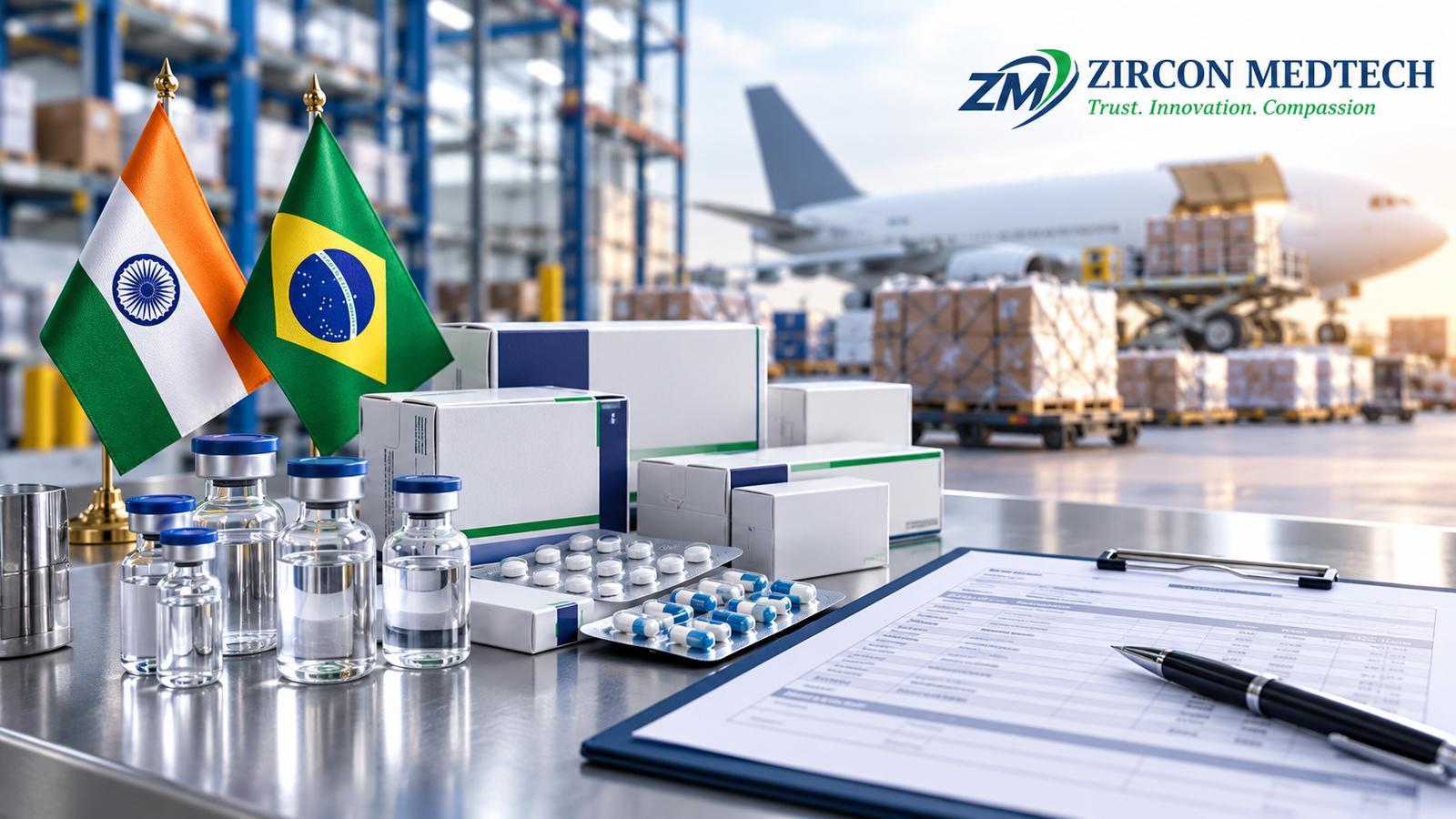
What Does Oncology Medicine Export Involve?
Oncology medicine export involves supplying medicines used in cancer treatment from a manufacturer or authorised supplier in one country to an eligible buyer in another.
A proposed transaction should clearly identify the medicine, its manufacturer, the supplying company and the intended import route.
Buyers should establish:
An offer for a particular active ingredient does not establish that every brand, presentation or manufacturing site is suitable for the Brazilian market.
Why Product-Specific Evaluation Matters
Oncology medicines should be assessed individually rather than treated as a single export category.
An oral medicine, a sterile injectable and a biological product can require different technical evidence and handling arrangements. Even products containing the same active ingredient may differ in formulation, packaging, approved indications and manufacturing location.
Before requesting a final quotation, buyers should provide a precise product specification. This helps the supplier confirm whether the requested presentation and supporting documents are available.
Product changes should also be controlled. A different strength, pack size or manufacturer should not be substituted without the buyer’s agreement and an assessment of the regulatory implications.
Understanding Brazil’s Regulatory Requirements
Brazil’s health regulatory agency, ANVISA, provides an official system for checking medicine registration information. Buyers should verify the relevant product details through official records rather than relying only on a supplier’s catalogue or promotional material.
The Brazilian partner should confirm the regulatory pathway for the intended transaction before shipment. Routine commercial supply, clinical research and exceptional imports should not be assumed to follow the same procedure.
Partners should establish who will manage product registration, import requirements, regulatory correspondence and ongoing obligations. Approval or availability in India should not be treated as evidence that the same product can automatically be marketed in Brazil.
Quality Checks Before Selecting an Indian Supplier
A supplier evaluation should connect the offered medicine to its actual manufacturer and supporting quality records.
1. Manufacturer Identity and Supply Authority
Confirm the manufacturer’s legal name, manufacturing address and relationship with the exporter.
If the seller is a trading company or distributor, request evidence that it is authorised to supply the offered products. Buyers should understand which organisation can respond to technical questions and provide manufacturer-controlled documentation.
2. Relevant Manufacturing Compliance
Review manufacturing compliance evidence for the facility and activities involved.
ANVISA’s guidance describes GMP assessment of foreign pharmaceutical manufacturers supplying the Brazilian market and the role of a legally established Brazilian representative in certification procedures. Buyers should therefore review the applicable Brazilian requirements rather than assuming an overseas certificate alone is sufficient.
Check certificate scope, validity and manufacturing-site details. A certificate covering one facility or production activity should not be assumed to cover all products offered by the supplier.
3. Batch Documentation
Request the documentation needed to evaluate the proposed batch, including its Certificate of Analysis where applicable.
The records should allow the buyer to match the product, batch number, specifications and release information. Any discrepancy between the quotation, packaging and batch documents should be resolved before dispatch.
4. Stability and Shelf Life
Confirm the approved storage conditions, expiry date and remaining shelf life at delivery.
The purchase agreement should define the minimum acceptable remaining shelf life. This should account for international transport, clearance, local distribution and the buyer’s expected stock turnover.
5. Complaint and Recall Support
Ask how the supplier handles quality complaints, suspected defects and recalls.
Agree on contact points, response expectations and access to the manufacturer when an investigation is needed. These arrangements should remain available after delivery.
Documentation to Review Before Shipment
Documentation serves different purposes. Product registration records, batch quality documents and shipping documents should be reviewed as separate parts of the transaction.
The following is a planning checklist, not a universal list of mandatory documents. The Brazilian importer should confirm the exact requirements for the product and import route.
1. Commercial and Transport Documents
Depending on the transaction, these may include:
Product descriptions, quantities, consignee details and shipment references should be consistent across the documents.
2. Product and Regulatory Documents
The review may include:
Partners should confirm which documents are available, who controls them and whether translations or other formalities are required.
3. Batch and Handling Records
These may include the Certificate of Analysis, batch and expiry details, release documentation and temperature records where relevant.
Preparing documents early gives the importer time to identify inconsistencies and request corrections before the shipment is booked.
Storage and Transport Considerations
Transport arrangements should follow the specific product’s storage requirements.
Not every oncology medicine requires refrigeration. Where temperature control is necessary, partners should define the permitted conditions and how they will be maintained throughout the route.
Practical considerations include:
A temperature excursion should be referred for a documented quality assessment. Returning a shipment to its required temperature does not establish that the product remains acceptable.
Planning for Reliable Supply
A successful first shipment does not establish long-term supply reliability. Buyers should assess whether the
1. Demand Forecasts and Order Quantities
Share realistic demand forecasts and confirm minimum order quantities.
The ordering plan should balance availability with expiry risk. Large purchases can create avoidable losses
2. Manufacturing and Delivery Lead Times
Distinguish between stock available for dispatch and products requiring manufacture.
Lead-time estimates should identify dependencies such as production scheduling, quality release, documentation preparation and freight availability.
3. Change Notifications
Agree how the supplier will communicate changes to manufacturing sites, specifications, packaging, availability or product discontinuation.
The importer should have time to assess the effect of a proposed change before accepting further supply.
4. Commercial Responsibilities
Define payment terms, delivery terms, insurance responsibilities and procedures for damaged, delayed or non-conforming shipments.
A clear agreement helps both parties understand what the quoted price includes and who is responsible at each stage.
Safety Monitoring and Ongoing Cooperation
Partners should allocate responsibilities for receiving and exchanging adverse-event information and handling product complaints.
The agreement should identify the responsible contacts and procedures for supporting applicable reporting obligations. Safety reports and quality complaints may require coordination between the exporter, manufacturer and Brazilian partner.
These responsibilities should be established before commercial distribution begins.
Questions Brazilian Buyers Should Ask
Before placing an order, buyers should be able to answer:
Unclear answers should be resolved before payment or dispatch.
Discussing Requirements With Zircon Medtech
Buyers approaching Zircon Medtech about oncology medicine export from India to Brazil should provide the active ingredient, strength, dosage form, pack size, required quantity and intended import route.
They should also specify documentation expectations, delivery requirements and minimum remaining shelf life.
Availability, manufacturer details and regulatory suitability should be confirmed for each proposed product. This creates a clearer basis for evaluating a quotation and planning the next steps.
Building a Reliable India–Brazil Supply Relationship
A reliable oncology medicine supply relationship requires clear product specifications, verifiable quality evidence and realistic delivery commitments.
Indian suppliers and Brazilian partners should agree on responsibilities before starting the transaction and maintain communication throughout the product’s supply lifecycle.
Careful preparation helps buyers identify documentation gaps, protect product quality during transport and develop a supply arrangement suited to their operational needs.








Share This News